Peptides vs. Live-Cell Extract Therapy: Understanding the Difference

Why the source of biological intelligence matters as much as the signal itself.

T W O A P P R O A C H E S T O T H E S A M E Q U E S T I O N

As regenerative medicine moves toward the mainstream, two therapies in particular have captured attention for their ability to influence cellular function: peptides and live-cell extract therapy. Both are biologically active. Both are capable of producing meaningful results. And on the surface, they can appear to be doing something similar, sending signals into the body that encourage repair and regeneration.

But the mechanisms behind them, the depth of their reach, and what they are ultimately asking the body to do are fundamentally different. Understanding that difference is essential for anyone serious about cellular longevity rather than surface-level optimization.

W H A T P E P T I D E S A R E , A N D W H A T T H E Y D O

Peptides are short chains of amino acids, the building blocks of proteins, that act as highly specific signaling molecules in the body. Because they are small enough to be synthesized in a laboratory, the peptide therapies in current use are typically engineered versions of sequences the body already produces naturally, isolated and concentrated to amplify a particular biological effect.

The appeal of peptide therapy lies in its precision. A peptide designed to stimulate growth hormone release will target that pathway with relative specificity. One formulated for tissue repair will activate particular repair cascades. Within their chosen pathway, peptides can be potent, and for many people they represent a meaningful step beyond conventional supplementation.

The limitation, however, is structural. Peptides are single-signal messengers. They speak one sentence to the body at a time. They do not carry the broader biological context of a living cell, the full-spectrum information that tells the body not just what to do, but how to prioritize, sequence, and integrate that action alongside everything else that is happening at the cellular level. They stimulate. They do not communicate
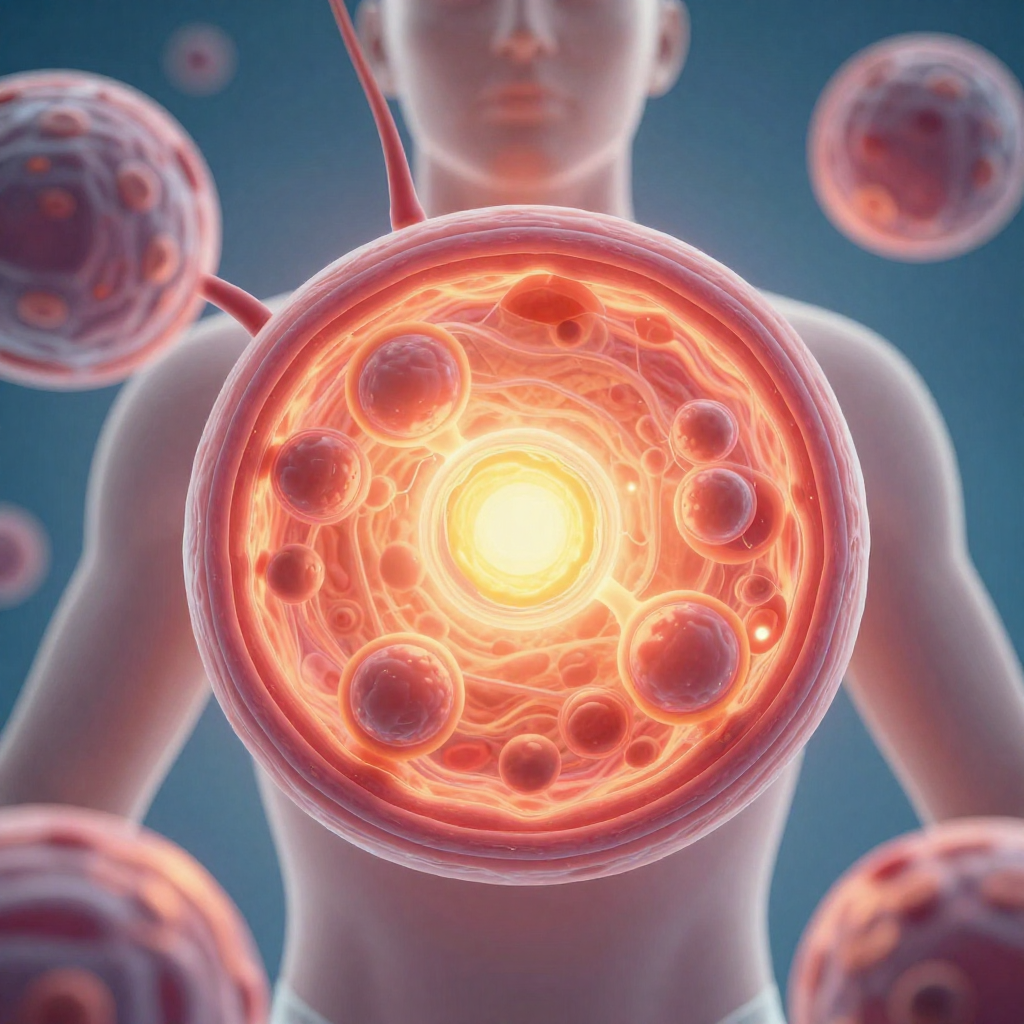
A peptide can tell the body to repair.

Live-cell extract therapy restores the body's ability to hear and act on that instruction in the first place.

W H A T L I V E - C E L L E X T R A C T T H E R A P Y I S , A N D W H Y I T ' S D I F F E R E N T
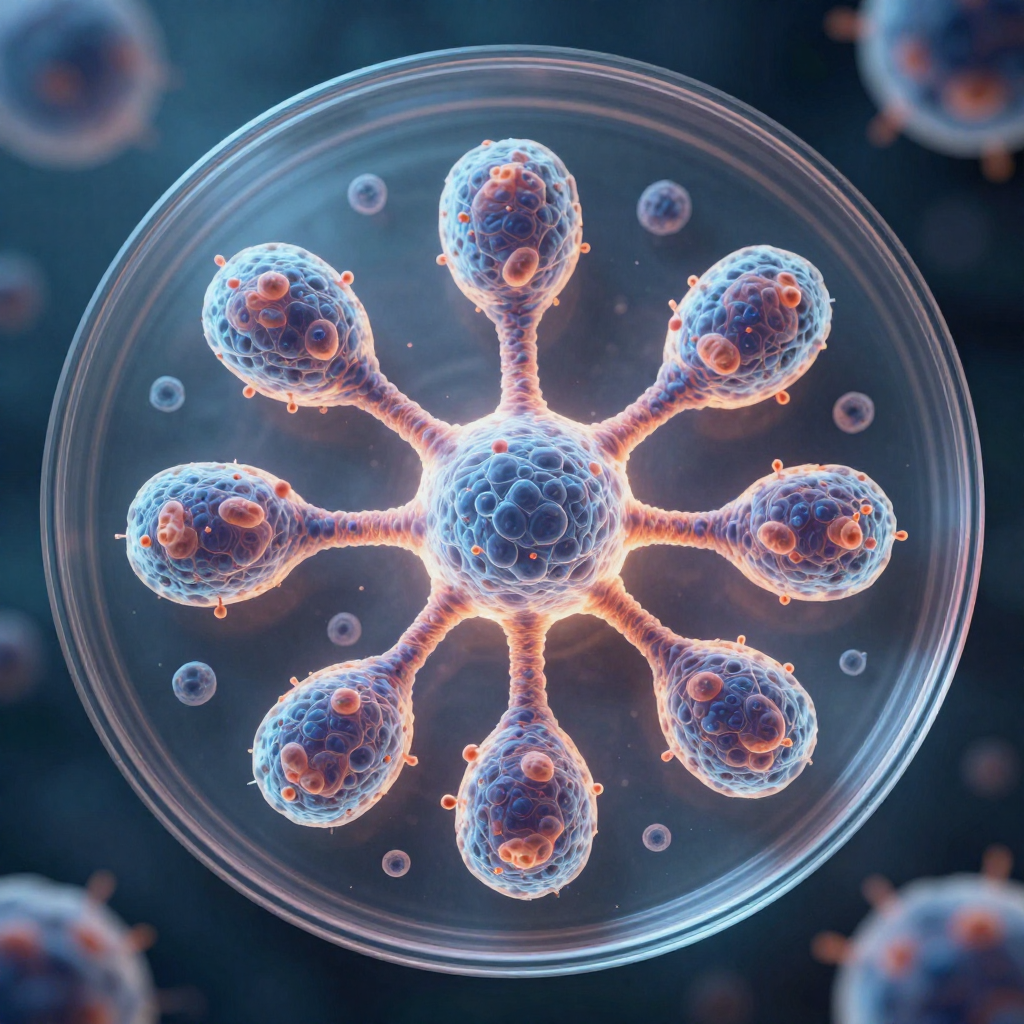
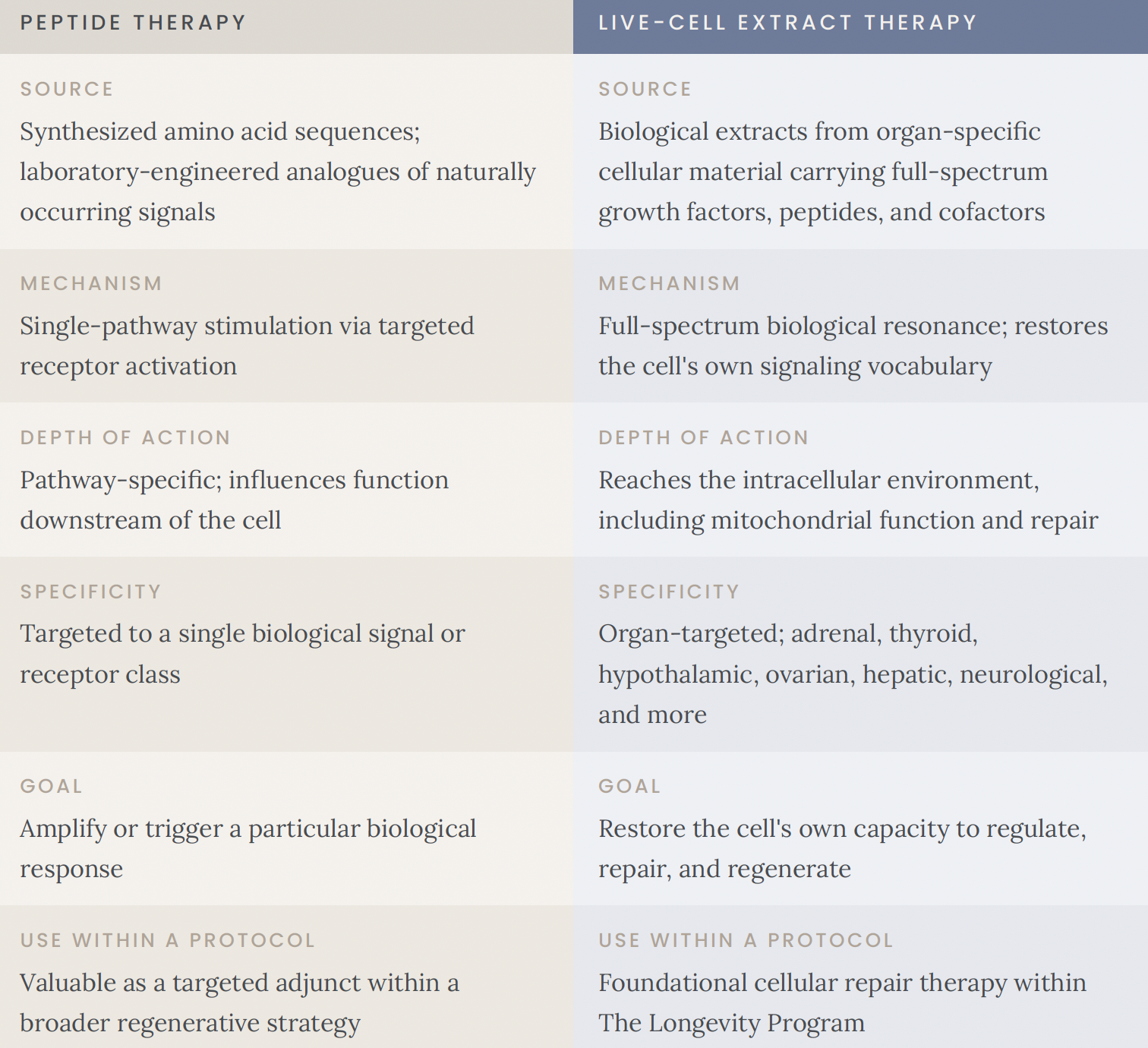
Live-cell extract therapy operates on an entirely different order of biological intelligence. Rather than delivering an isolated signal into the body, it delivers biological information drawn from intact, organ-specific cellular material — extracts that carry the full complement of growth factors, signaling peptides, nucleotides, and cofactors that a healthy cell uses to regulate and repair itself.

The principle behind it is resonance rather than stimulation: introducing information that the body's own cells can recognize, read, and integrate. When depleted or dysfunctional cells receive this kind of full-spectrum biological input, they are not simply told to activate a single repair pathway. They are given the complete vocabulary they need to begin restoring their own capacity to function.

The specificity of live-cell extract therapy lies in its organ-targeted nature. Different cellular extracts carry the signature of the tissue they are drawn from adrenal, thyroid, hypothalamic, ovarian, hepatic, neurological, allowing the protocol to be directed precisely at the systems showing the greatest depletion.

This is not a systemic boost. It is a targeted conversation, delivered in the native biological language each organ system is already designed to receive.

A T T H E L E V E L O F T H E M I T O C H O N D R I A

Where these two approaches diverge most significantly is at the mitochondrial level. Peptides, by design, act through receptor-mediated signaling pathways. They are capable of influencing mitochondrial function indirectly, as a downstream effect of the pathway they activate. But they do not directly address the energetic environment inside the cell.

Live-cell extract therapy works closer to the source. The biological material it introduces includes the precise cofactors, nucleotides, and signaling compounds that mitochondria use to carry out energy synthesis, regulate oxidative stress, and coordinate cellular repair. In a cell whose mitochondrial function has been compromised by age, chronic stress, or accumulated inflammation, this represents something qualitatively different from stimulation: it is a restoration of the raw communicative material the mitochondria depend on to do their work.

This is why live-cell extract therapy occupies its own category within regenerative medicine, and why it sits at the core of the cellular repair protocols used within The Longevity Program. It does not override the body's own intelligence. It replenishes it.

S I D E B Y S I D E


At Mon Chère, we do not position peptide therapy and live-cell extract therapy as competing options. Within a well-structured regenerative protocol, both have a role. Peptides can be a valuable and precise adjunct, particularly for targeted applications where a specific pathway benefit is desired alongside deeper cellular work.

But live-cell extract therapy is foundational in a way that peptide therapy is not. Before a cell can effectively respond to a targeted signal, it needs to be capable of receiving, processing, and acting on that signal. Mitochondrial depletion, chronic inflammation, and accumulated cellular stress all compromise that capacity. Attempting to stimulate a cell that has lost its communicative infrastructure is a little like broadcasting on a frequency the receiver can no longer tune to.

This is why cellular repair through live-cell extract therapy comes first within The Longevity Program not because it produces the most immediately visible result, but because it restores the biological foundation everything else depends on. It is the work that makes all subsequent work more effective. Regeneration, in the truest sense, begins here.

To learn how live-cell extract therapy and our full cellular repair protocol can be built around your biology, we invite you to begin with a consultation through The Longevity Program.


Next
Next

Testosterone and Hormones: Beyond the Numbers